

Union With God
What pleases God is His own righteousness, the Divine Spirit displayed through our personalities. All we contribute is our consent but that consent is not easily come by.

“So God created mankind in his own image, in the image of God he created them,” (Gen 1:27), in His image, but not in His likeness. That we were to acquire. If He had created us as saints, we could not become genuine saints. God created us as tribal warriors, depraved idolaters, ignorant savages, so we could become holy intelligent saintly human beings, in His image and likeness.
The rabbis have an interesting secondary interpretation of the word Adam. The primary meaning is “from the ground,” since adamah means “ground” or “earth.” But a secondary interpretation of Adam takes the root domeh meaning “similarity” or “likeness” and places an aleph (a) in front as a prefix meaning “I will,” and translates “I will be similar,” or “I will become like,” referring of course to God. [1]
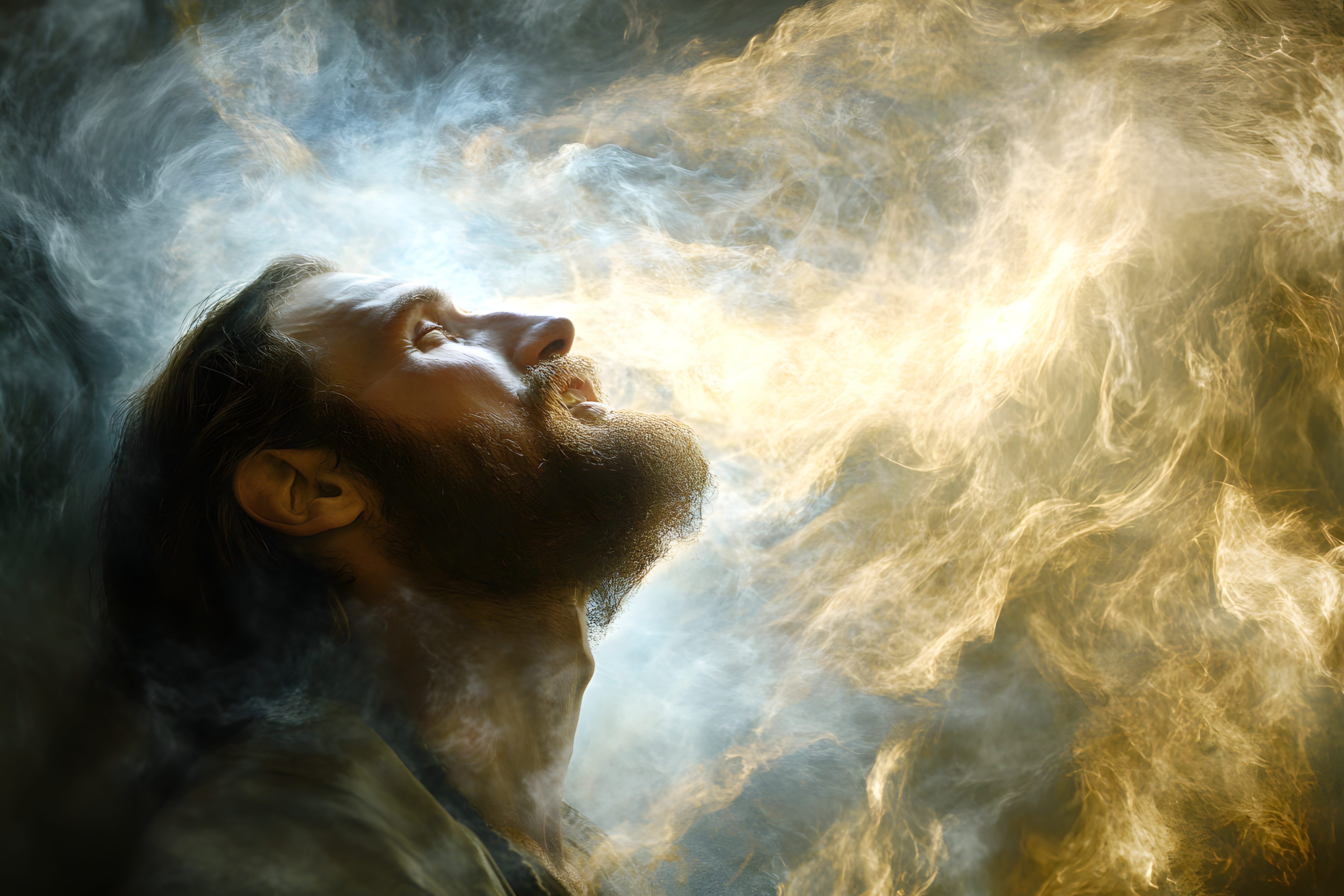
Adam is becoming “like God,” thinking like God thinks, speaking like God speaks, and doing what God does in this physical world. We do that in the power of the Divine soul, imparted to us at regeneration, with the indwelling of the Holy Spirit. Formerly controlled by the animal soul, now we have the power of God working within us, sanctifying us.
“Lord, You will establish peace for us, for You have also done all our works in us” (Is 26:12 NKJV). The righteousness that pleases God is His own righteousness, the Divine soul displayed in us, performed in us by His Spirit through our personalities. That indwelling Spirit was lost to us in Eden, and for millennia we operated on the animal soul alone.
Israel received the Spirit in Abraham. “As for me, this is my covenant with them,” says the LORD. “My Spirit, who is on you, will not depart from you, and my words that I have put in your mouth will always be on your lips, on the lips of your children and on the lips of their descendants—from this time on and forever,” says the LORD. (Is 59:21).
Jesus offered it to us. Jesus called it “abiding in me” and said we could not expect to accomplish anything if we were disconnected from Him. “Remain in me, as I also remain in you. No branch can bear fruit by itself; it must remain in the vine. Neither can you bear fruit unless you remain in me” (John 15:4).
The fruit of His Spirit is impressive indeed. It inspires us, and it pleases Him greatly. When He says, “Now go and sin no more” (John 8:11) He empowers that. The only thing we contribute is our consent; He does all the heavy lifting. But that consent is not easily come by. It requires us to surrender our animal soul, our natural strength and self-effort, our flesh, our ego.
We have been reviewing Tanya, the landmark work of Chabad Judaism, written during the late 1700s by Rabbi Zalman. He distinguishes between the natural power of the human animal soul and the massive power of the Holy Spirit within a person, the Divine soul. Living in our Divine soul we participate in God’s ongoing activity in this world.
This post is based on Chapter 23, pages 94-100 of the Bilingual Edition of Tanya.
The commandments constitute the innermost will of the Supreme One and His true desire which are clothed in all the upper and nether worlds, thereby giving them life…
For just as the organs of the human body are a garment for soul and are completely and utterly surrendered to it, as evidenced from the fact that as soon as a person desires to stretch out his hand or foot, they obey his will immediately and forthwith, without any command or instruction to them and with no hesitation whatsoever, but in the very instant that he wills it.
God does not require that we surrender our will to Her (God is not restricted to any gender, I alternate between masculine and feminine pronouns) in our own strength; She accomplishes that feat within us by Her strength. “For it is God who works in you to will and to act on behalf of His good purpose” (Phil 2:13). Our contribution is to give our consent, verbally and actually.
If my keyboard is controlled partially by another person, I will not be able to write with it. If your life is controlled partially by you, God will not be able to work Her will in it. She will empower every relinquishment She demands with Her omnipotence, but only with our consent. God is not a slave driver or a puppet master. Her power is such that She rules without autocratic control.
She works Her character into our lives, caring, generosity, compassion, humility, patience, self-giving love in the crucible of human relationships. She builds trusting dependence on Her into our souls in the context of real-life choices and situations, and by meditation in Scripture, solitude, and prayer.
It follows that the performance of the commandments and their fulfillment is the innermost garment of the innermost will of the Supreme One, since it is due to this performance that the light and life of the Supernal Will issue forth to be clothed in the worlds.
Likewise, the external garment of the Divine soul in the person fulfilling and practicing the commandments – this being its faculty of action – clothes itself in the vitality of the commandment, thus also becoming like a body in relation to a soul, the “soul” being the Supernal Will to which it is completely surrendered.
The Divine Soul, the Presence and Power of the Holy Spirit within us, is connected to the Will of God by its very nature. The highest aspect of the Divine soul, known as “neshamah” or breath of God, knows with a high level of knowing, pre-verbal, inarticulate knowing. Often called “intuition” this aspect of the spirit hears and knows the Will and Wisdom of God by continuous flow of the unspoken breath of God.
That beam of insight known as chochmah, wisdom, is understood, binah, in the second level of the divine soul, “ruach,” the speaking spirit. Here words are assigned that articulate and verbalize the inflow of Will and Wisdom, passing off to Understanding. This aspect of the soul applies the Will and Wisdom of God to the situation at hand, identifying an opportunity to do a kindness, seeing the solution to a dilemma, or knowing what to say in a situation.
The Divine soul will then take direct action but only in cooperation with the personal animal soul, your ego identity. If the animal soul resists the promptings of the divine soul, and it is in command of the “small city,” your thoughts, words, and actions, you may decide to think or say or do something other than what the Spirit prompted you to do. That decision may or may not be sin. It may be a lesser good than what the Spirit prompted you to do, yet still short of the Will and Wisdom of God.
In this way, the organs of the human body which perform the commandment… truly become a vehicle for the Supernal Will; as, for example, the hand which distributes charity to the poor… or the feet which carry a person toward the performance of a commandment; similarly with the mouth and tongue engaged in uttering the worlds of Torah or the brain engaged in reflecting on the words of Torah or on the fear of Heaven or the greatness of God, blessed be He.
This is what the Sages meant when they said that the Patriarchs were truly the “chariot” of God, for all their organs were completely holy and detached from mundane matters, serving as a vehicle solely for the Supernal Will alone throughout their lives.
Living as a chariot for God means to surrender your own will and ego, your animal drives and agenda to enact God’s will. It requires us to surrender our natural strength and self-effort, our flesh, our ego. Just because we are doing “churchy” things does not mean we are automatically doing them in Her power. We must actively crucify the flesh, the “good” flesh and the “bad” flesh, it’s all of a piece to Her, all poisoned and jaundiced. “Flesh is born of flesh, but spirit is born of the Spirit” (John 3:6).
In the power of the Divine Soul, God’s Spirit, motivated by love, the quality of the good things we do and the spontaneous joy with which we do them lifts us up into the presence of God and brings glory to God. You are partially passive, but also an active participant as She enacts in your life the most astounding things. It heightens your love for Her to see how beautiful Her righteousness is within you.
Animal ego directed activity might look good on the outside but the heart behind it has the odor of an animal. Think about it, who is glorified when we are righteous? When we do something good in our own strength, by our own cunning, who do we think highly of? Who are we hoping will be noticed?
And what do we think of the person next to us who does not perform quite as well as we do, does not participate in our pet program or follow our rules, does not look like us or think like us or go to the same club house – church – as we do?
Are we acting like Jesus when we think like this? Do people looking at us mistake us for Him? Do they thank Him or praise Him that we are so wonderful and generous? Animal righteousness may do wonderful things, feed the hungry and visit the sick, but the heart from which it does them is radically different from His heart and no one is fooled, least of all Him.
Our animal ego’s righteousness leads us to admire ourselves which is the wrong direction to move. “’I will fill the soul of the priests with abundance, And My people will be satisfied with My goodness,’ declares the LORD” (Jer 31:14 NASB emphasis added).
Plugging in to the Divine soul
Time spent in God’s company in prayer, contemplating His word, doing His work, and loving His people, draws His character into our character, His Neshamah into our neshamah, His breath into our soul.
A central type of Jewish meditation is centered on halakha, the way, the walk of Torah. That sounds dry and boring to us, but with the right understanding, it is fascinating and brings deep communion with God. The mitzvot, laws, are bonds with God; in the doing of them we are bonded to God, doing in this world as He does in the real world of Uncreated Being.
All the [Torah’s] laws are particular streams flowing from the innermost will of the Supreme One…. So also are … the Torah, Prophets, and Writings a promulgation of His will and wisdom which are united with the En Sof, blessed be He, in perfect unity, since He is the Knower and the Knowledge and so forth. This, then, is the meaning of “The Torah and the Holy One, blessed be He, are altogether One.”
The ancient Christians called this imitatio Dei, imitation of God, doing as God does, caring as God cares, loving as God loves, becoming more like God. It expands our neshamah soul, increases our God capacity, improves the blood supply to our heart.
Now, since at such a time as a person occupies himself with the words of the Torah, the Supernal Will, united as it is in perfect unity with the En Sof, blessed be He, is completely manifest and in no way obscured in the divine soul and its innermost garments, i.e., its thought and speech – it follows that the soul and its garments are also at such time veritably united with the En Sof, blessed be He, in perfect unity, like the union of the “speech” and “thought” of the Holy One, blessed be He, with His essence and being.
This Holy Spirit righteousness is not something we generate in our animal ego; there is no effort or concentration or planning, and it flows out in the most natural and spontaneous ways. We are connected to the Vine and focused only on Him, in prayer and study of Scripture, drawing nourishment and comfort from Jesus. Fruit comes flying out of us, the fruit of His Spirit, righteousness, love, peace, joy that we did not generate and can take no credit for, may not even be aware of. “I am like a flourishing cypress; your fruit comes from Me” (Hosea 14:8).
It is a higher righteousness than we could ever produce, holier and more beautiful, compassionate with His compassion, humble with His humility, persistent and tenacious, committed to the good of another for His sake. “Now the Lord is the Spirit, and where the Spirit of the Lord is, there is freedom. And we, who with unveiled faces all reflect the glory of the Lord, are being transformed into His image with intensifying glory, which comes from the Lord, who is the Spirit” (2 Cor 3:17-18), into His image and likeness.
Moreover, their union is even of a higher and profounder order than the union of the Light of the En Sof, blessed be He, with the upper worlds [ the heavens], since the Supernal Will is actually manifest in the soul and its garments when they are engaged in the Torah… while all the supernal worlds receive their vitality from the light and life that are derived from the Torah, which is His will and wisdom, blessed be He, as it is written, “You have made them all with wisdom.”
Thus, His wisdom, i.e. Torah, is above them all, and it is identical with His will, blessed be He, which is described as “encompassing” all worlds… animates and illuminates in a transcending and encompassing manner.
This spiritual union with God is known in rabbinic circles as Messianic consciousness, a high level of awareness and participation in the Will of God. Messianic consciousness includes spiritual sensitivity to the chochmah and binah flowing out of heaven all the time. As we transcend our individual animal consciousness, the veil over the subconscious / supra-consciousness is split from top to bottom, and a river of insight, revelation, and compassion is released, producing growth and maturing spiritual fruit.
Yet, it [this very light] does clothe itself in the human soul and its garments in a truly manifest form, when the person occupies himself with the words of Torah, even though he does not perceive it… [this is what enables him to endure it, because he does not perceive it; it is otherwise, however, in the case of the upper spheres.]
From this the intelligent man will be able to draw a sense of great awe as he occupies himself with Torah, considering how his soul, and its “garments” in the brain and mouth, are truly merged in perfect unity with the Supernal Will and light of the En Sof, blessed be He, which are manifest in them. Compared to this all the worlds, supernal and nether, are truly nought.
Mitzvah, good deeds, obedience is an expression of love for God, not rigid legalism. The term “commandment” (mitzvah) does not have the connotation of cruel demand or authoritarian order to Jews that is has for us.
In the Jewish mind, a commandment is an opportunity to delight God, do something He values, an action that draws them closer to His heart. An alternate translation of mitzvah is “bond or union” of wisdom with action, of God’s Will with the human will; to be in this world as He is in reality. We experience communion with God in sacrament; they experience it in action with kavvanah - intention. “O how I love Your law! It is my meditation all the day” (Ps 119:97 ESV). There is no such thing as rote, mindless obedience in Judaism.
Hebrew has four words that approximate obedience in English. Halakha means “to walk,” a way of life, a culture and identity centered around the Torah. It is not static or sclerotic, rather alive and always heard anew, “On this day.” The Law reveals to them the right way to go, the best way to do life.
Shema “to hear,” means to listen, study, contemplate His Torah; and Shamar means “to keep,” to protect, cherish, treasure His word. Notzrai “to observe” means to preserve, tend, maintain to eternity. There is no element of perfectionism in any of those concepts.
“Now it is clear that no one is justified before God by the law, because, ‘The righteous will live by faith’” (Gal 2:16). Righteous Jews live by faith just as much as we do. Obedience is what they do because they are saved by faith, faith in God. Torah is a joy, a delight, a beauty, and a privilege in the Jewish mind. She is not Abraham’s sister; she is his bride!
This is the meaning of the verse, “And God commanded, in order to fear God…” [Regarding this “great fear” it was said, “If there is no wisdom, there is no fear,” and in relation to Torah is called “a gateway to the dwelling.”]
However, not every mind can sustain such fear; yet even he whose mind cannot bear such fear at all, whether in whole or in part, because of the inferiority of his soul’s level in its root and source in the lower gradations of the ten sefirot of the World of Assiya, nevertheless the lack of such fear is no obstacle to performance.
In Hebrew, the words “to see” Yir’eah ראה’ and “to fear” Y’reah ראה’ in some conjugations look identical. To accurately “see” Christ is to “fear” Him, an awe and respect that should include a strong element of actual fear. If we really understood and glory and majesty of our Lord, the idea of deliberately sinning against Him, attempting to deceive Him, imagining Him ignorant of our thoughts and motivations, would be unimaginable. [2] “In Him we live and move and have our being.”
God created by thinking, by knowing, by Christ articulating His thoughts and causing them to materialize as His created universe. God’s knowledge of any creature is its life-force, that which brings it into existence, whether it is a rock or a dog or a person. There is nothing in our heart or mind that He does not know and understand completely. We don’t understand our own Jesus, His power and majesty. We think He is as blind as our old idols.
An essential element of fear, awe, respect for our God and His Christ is missing in many sectors of the Church. “Then Pharaoh removed the signet ring from his finger, put it on Joseph’s finger, clothed him in garments of fine linen, and placed a gold chain around his neck. He had Joseph ride in his second chariot, with men calling out before him, ‘Bow the knee!’ (abrech) So he placed him over all the land of Egypt” (Gen 41:42-43). Abrech to bend the knee is related to Baruch, to bless or praise.
Christian disrespect of Judaism
We Christians assume Jews have a caveman style relationship with God, fearful to the point of superstition, terrified of judgement and damnation. We think the same God we trust to be faithful to His covenant with us has thrown Judaism under the bus. If He has done that, we cannot trust Him either.
Our innate tribalism is part of our human-animal nature, one that we are to subdue if we are to attain the likeness of God and enter Messianic consciousness. Our most peaceful tribal relationships are based on mutual benefit and trade. God dispersed us all over the planet so that people of different climates could trade and exchange the produce of the land, enriching everyone by making northern cranberries available to southern cultures, and southern fruit available to people living in high mountains.
We can trade in the spiritual produce of the land as well as in the material abundance with which She has blessed us. We do it with respect for our differences and appreciation for the gifts and callings of other tribes. If I sell you Georgia peaches, but refuse to buy your New England cranberries, you rightly feel offended and insulted. If I push you to see the beauty of the cross but refuse to learn from you how to read and live by Torah, you rightly feel offended and insulted.
But if I hear your Torah wisdom and bring it back to my country, understanding my own struggles and needs, my demons and kelipot, much better in the light of your Torah study, I am enriched, and you are honored. Georgia peach cobbler is enhanced by a little cranberry.
Blessed are the poor in spirit, those who mourn. As we relinquish our power and control – or are stripped of it – we become first meek and hungry, then humble and merciful, and finally pure hearted peacemakers, filled with Her Spirit because emptied of our own. Our sense of entitlement, our feeling of superiority, our illusion of mastery over the things of God, all of it is mist and fog, separating us from God.
“Then Jesus told His disciples, ‘If anyone wants to come after Me, he must deny himself and take up his cross and follow Me. For whoever wants to save his life will lose it, but whoever loses his life for My sake will find it. What will it profit a man if he gains the whole world, yet forfeits his soul? Or what can a man give in exchange for his soul?’” (Matt 16:24-26).
Content with who we are and where we are, we no longer resent other people’s gifts and beauty, or their relationship with God; we are the owners of our own souls. Freed of our tribal animal nature, we as a community enter the world of Chayyah, Messianic consciousness, in union with God and with every other community empowered by the Holy Spirit who blows where She will.
“But Esau ran to meet Jacob and embraced him; he threw his arms around his neck and kissed him. And they wept” (Gen 33:4).

[1] Rabbi Aryeh Leibowitz. The Neshamah. (Jerusalem: Feldheim Publishers, 2018) p. 119.
[2] In the rabbinic courts, robbery is considered a lighter crime than burglary, because while the robber was in open defiance of the law, the burglar thought God was so ignorant or inconsequential that he could sneak around on Him which made burglary a more weighty sin, punished more severely.
I know this is kinda like asking you to brag (or tell on yourself), but do you feel you've made much progress in surrendering your ego? I'm about as good at that as I am at meditating...pathetic!